

Gauged Porcelain Tile Panels (GPTP) and large format slabs are trending materials and essential for most high-end residential and commercial projects. However, these materials involve logistical challenges so workers must master large format tile installation tools.
Why Workflow Efficiency Matters in Large Format Tile Installation
When dealing with panels and slabs, it is important to work smarter, not faster, in order to protect your margins. A single mistake can cost thousands of dollars per piece.
The Cost of Material Damage and Rework in GPTP Projects
As mentioned before, a mistake during the large format cutting or a fracture during transport can have a significant impact on the final profitability of the project. Repeating the work means buying new material and spending hours removing thin-set that has already begun to cure.
Installer Fatigue as a Productivity and Safety Risk
Handling big porcelain panels is risky and physically demanding. The right slab system reduces the need for raw physical strength, thereby preventing crew fatigue. When installers handle slabs without mechanical assistance, the risk of musculoskeletal injuries increases.
How Inefficient Workflows Reduce Jobsite Profitability
Every step, delay or workaround erodes profitability because a negative workflow creates bottlenecks. Productivity increases when people move through the site in a coordinated way. When everything is controlled, margins are protected.
Understanding Large Format Tile Installation Tools
It’s important to understand what the best tools are for the demands of the present, and when implemented correctly, the workflow becomes optimized.
What Qualifies as Large Format Tile Installation Tools
There are instruments designed to handle the tension, weight and dimensions of Gauged Porcelain Tile Panels, such as:
- Modular conveyors
- Precision rail saw systems
- Mechanical leveling systems
- Specialized trowels
Why Standard Tiling Tools are Not Enough for GPTP Panels
Sometimes cracking happens during or after the installation because of the use of the wrong tools, which creates internal stress in the porcelain. Make sure to work with the correct tools to guarantee safety and efficiency, but also for protecting material and getting a professional and aesthetic result.
The Role of System-Based Solutions in Professional Workflows
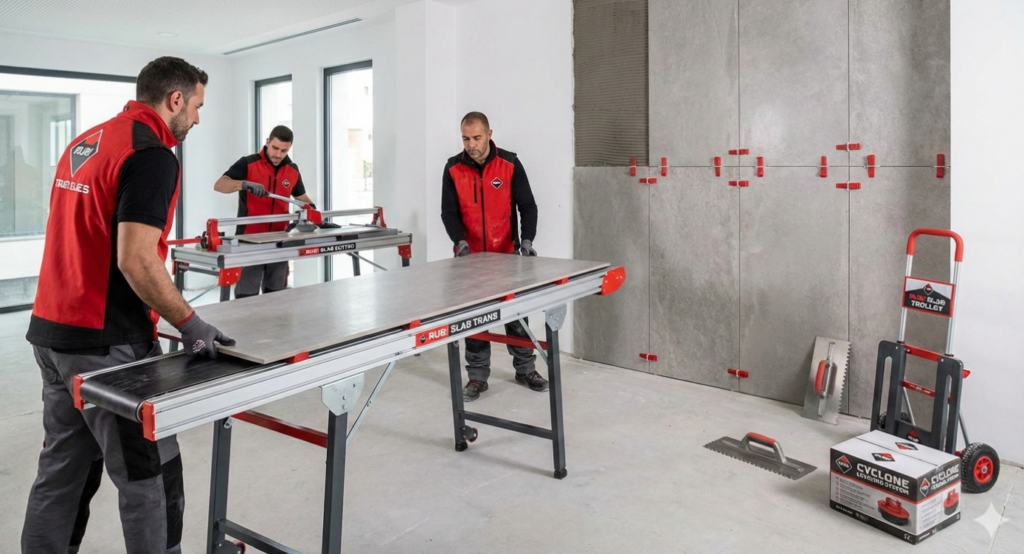
In a system, every component is designed to work in harmony with the other components. The RUBI SLAB SYSTEM is an example of this, designed so that each tool hands off the material to the next stage with precision and reduces the number of times the slab must be touched.

Optimizing the Workflow from Delivery to Final Placement
Safe Unloading and Transport of Large Format Panels
Try to reduce every risk of cracking during the transport phase. It’s recommended to use a dedicated transport cart to move pieces.
Controlled Cutting and Handling to Minimize Breakage
The slab must be stabilized before making the first cut. The use of a slab cutter when performing large format cutting prevents running cracks. Our guide on The Best Large Format Tile Saws for Precision Cutting is essential for choosing the right equipment.
For interior cutouts, here is a professional tip: drill the corners first with a diamond to dissipate stress before connecting the lines with a saw.
Coordinating Transport, Cutting, Leveling and Positioning Stages
- Secure the slab to the conveyor system: first, secure the slab while it is on the table to prevent damage.
- Apply adhesive to the back of the tile while it is on the trolley: the tile must be vertical to ensure even application.
- Use the conveyor system to put the tile onto the wall or floor: it decreases the risk of misalignment and installers can place large-format slabs accurately.
Engage the leveling system: it avoids lippage and maintains joint alignment.
Reducing Risk and Installer Fatigue on Site
How Proper Handling Systems Prevent Material Stress
Porcelain slabs have a low tolerance for twisting forces. For this reason, it is important to work with the right tools and proper handling systems act as a temporary exoskeleton for the slab. They distribute the kinetic energy and prevent forces from directly impacting the porcelain.
Ergonomic Advantages When Working with Large Panels
Working with large-format panels can be physically demanding. However, ergonomic handling systems allow installers to work more comfortably, improve productivity and prevent musculoskeletal injuries.
The Role of Tile Leveling Systems in Reducing Manual Adjustments
Moving a slab manually is nearly impossible, so it is important to use leveling systems. They reduce installer fatigue, ensure the integrity of the material and help maintain project margins.
Why Tile Leveling Systems are Critical in Large Format Workflows
In Gauged Porcelain Tile Panels (GPTP), even a minimum height difference is a visual failure.
Preventing Lippage and Stress in Large Format Tile Installations
Maintaining a professionally flat surface across panels is a challenging task. Distributing that tension across the tile surface is the role of leveling systems. It is critical to hold each tile in place and combat tile shrinkage.
Delta Leveling System: Precision and Control for Large Panels
For a controlled installation of large panels, the solution is the Delta leveling system. This system is well suited for heavy slabs that are difficult to manipulate. It assists installers in applying the correct pressure across the surface of each tile. Furthermore, it reduces the labor required to achieve a perfectly level installation.
Cyclone Leveling System: Speed and Efficiency in Repetitive Layouts
The Cyclone leveling system uses a simple threaded cap to achieve precise tile alignment. This type of leveling allows installers to work quickly, especially when working with multiple panels.
Why the RUBI SLAB SYSTEM Improves Productivity and Profitability
Integrating Transport, Cutting and Leveling into One Workflow
An efficient installation is based on the perfect integration between all processes. For example, moving a panel from the cutting station to the wall with minimal contact reduces the risk of damage.
Saving Time Through an Organized and Repeatable Installation Process
Having a coordinated crew is the result of following a repeatable workflow and carrying out perfect planning. A correct organization speeds up the work and reduces physical strain.
Long-term Return on Investment for Contractors and Crews
The initial investment in a full large panel workflow might appear significant but it guarantees long-term profitability. Take into account that material savings, professionalism and efficiency improve the reputation of the service and crews benefit from less physical strain, reducing sick days and turnover.

Post a comment