

Did you know that there are roughly 450 billion floors sold in the world each year? You can buy new flooring to replace a small area in your space or opt for a full-property remodel. Among all the premium options available, marble flooring stands out as the ultimate symbol of timeless elegance.
Whether you are planning to upgrade your entryway or searching for the perfect marble tile bathroom design, natural stone offers an undeniable touch of luxury. However, marble has distinct strengths and weaknesses. Understanding the different types, finishes, and maintenance requirements can help you decide whether it’s the right choice for your next flooring project.

What is Marble Flooring? (The Geology Behind the Stone)
Marble has graced the palaces of kings and queens for centuries. Geologically, marble is a metamorphic rock that forms when sedimentary limestone is subjected to intense heat and pressure over millions of years. This natural process creates a harder stone characterized by its beautiful color variations and signature wavy, veined patterns—which visually distinguishes it from the pebbly, spotted look of granite.
Top Types of Marble Flooring
Most marble used in residential tile installations is quarried from mountainous regions in Italy, Spain, Turkey, and Greece. Knowing the name of the stone is crucial for achieving your desired aesthetic:
Carrara and Calacatta Marble
- Carrara Marble: Quarried in the Carrara region of Italy, this is the most common and economical type of marble flooring. It features a grayish-white background with soft, feathery gray veining.
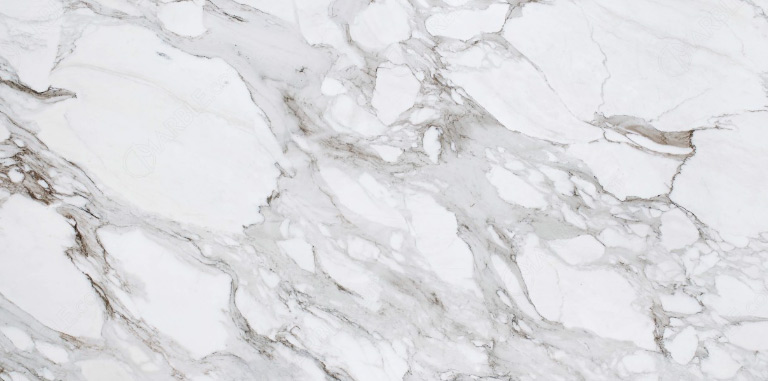
- Calacatta Marble: Also from the Carrara region, Calacatta is rarer, making it a highly expensive luxury option. It boasts a bright, translucent white background with striking, thick dark gray or gold veining.
Statuary, Emperador, and Crema Marfil
- Statuary (Statuario): Features a highly translucent white background with dramatic veining for a highly luxurious feel.
- Emperador: Quarried in Spain, this stone comes in rich shades of brown with irregular, light veining.
- Crema Marfil: Another Spanish export, offering warm beige and yellowish tones with subtle intensity.
Modern Color Variations: Black, Pink, and Green
While white is classic, modern interior design embraces bold colors. Designers are increasingly utilizing black marble (like Levadia Black or Piano Memphis patterns), as well as vibrant pinks, reds, and deep greens to create powerful contrasts and geometric floor inlays.

Honed vs. Polished Marble: Choosing the Right Finish
When selecting your marble floor, the finish is just as important as the color.
- Polished Marble: This finish is smooth and shiny, reflecting light beautifully to create a luminous, almost translucent effect. However, polished marble shows scratches easily and becomes incredibly slick when wet.
- Honed Marble: This finish is ground down to a flat, dull, matte appearance that absorbs light rather than reflecting it. Honed marble is significantly more scratch-resistant and provides much better foot traction.
Is Marble Flooring Good for Bathrooms and Kitchens?
One of the most frequently asked questions is: Is marble tile good for bathroom floor applications?
The answer is yes, but with a critical caveat. Because polished marble flooring can be dangerously slick and slippery when exposed to water, it poses a fall hazard in wet environments. If you are designing a marble flooring bathroom, you must either opt for honed (matte) marble to ensure slip resistance or use smaller polished tiles where the numerous grout lines will provide natural grip.
Pros of Marble Floor Tiles
Unmatched Elegance and Unique Aesthetics
Because marble is a product of the earth, every single tile is 100% unique. You will never find two slabs with the exact same veining. This distinctive personality elevates the appearance of a space, giving it a regal bearing that is hard to imitate.
Radiant Heating Compatibility
All natural stone feels notoriously cold underfoot. However, marble is a fantastic conductor of heat, making it perfectly adaptable to below-surface radiant floor heating systems. This turns a cold floor into a wonderfully cozy surface during winter mornings. Furthermore, hard surfaces like marble won’t trap dust or trigger allergies the way carpets do.
Adds to Resale Value
Marble floor tiles make a property seem far more opulent. This premium architectural element attracts buyers and significantly increases your home’s value on the real estate market.

Cons of Marble Floor Tiles
Porosity, Stains, and Negative Reaction to Acid
Marble is a porous stone, meaning you cannot allow standing water to puddle on the surface, as it will penetrate and discolor the material. Furthermore, because marble is derived from alkaline limestone, it has a severe chemical reaction to acidic substances. Spilling tomato sauce, orange juice, or harsh acidic cleaning products will cause permanent etching and discoloration.
Susceptible to Scratches and Slipperiness
Marble is a relatively soft and brittle stone. Dragging heavy furniture or dropping hard objects can scratch, scrape, or chip the surface, especially on highly polished tiles where imperfections are glaringly obvious.
High and Unpredictable Pricing
Marble is a premium material priced accordingly. The cost generally ranges from $10 to $20 per square foot for standard materials, with luxury options like Calacatta soaring to $40 or more per square foot. Professional installation adds another $3 to $7 per square foot to the total bill.
Marble vs. Porcelain Tile Flooring: Which is Better?
If the cost and maintenance of natural stone seem overwhelming, porcelain tile is an excellent alternative. Modern porcelain is manufactured to realistically mimic the veining of natural marble.
- Cost: Porcelain is considerably cheaper, averaging $5 to $10 per square foot.
- Durability: Porcelain is highly water-resistant, immune to acidic stains, and much harder to scratch, making it a highly durable kitchen flooring choice.
- Maintenance: Porcelain only requires the grout lines to be sealed, whereas marble requires the entire stone surface to be sealed annually.
Maintenance and Installation Tips for Marble Floors
Routine maintenance involves sweeping and damp mopping with a strictly pH-neutral cleaner. Unlike ceramic tiles, a marble floor requires a chemical penetrating sealer to be applied immediately after installation, and re-applied annually to prevent permanent stains.
From an installation standpoint, marble tile is exceptionally heavy yet brittle. Unprepared DIYers often waste material through breakage because natural stone is considerably more difficult to cut and drill than ceramic. To successfully cut the tiles without chipping the delicate glaze, specialized tools like wet saws equipped with premium diamond blades are strictly required.
Upgrade Your Home With Marble Floor Tiles
No flooring material conveys sophistication and style better than marble. However, it requires considerable care, proper subfloor preparation, and immediate sealing.
If you are ready to take on a premium tiling project, RUBI tools are designed to handle the toughest natural stones, making precision cutting easy. If you want to learn more and gather inspiration for your layout, check out these beautiful tiling ideas.

Post a comment