
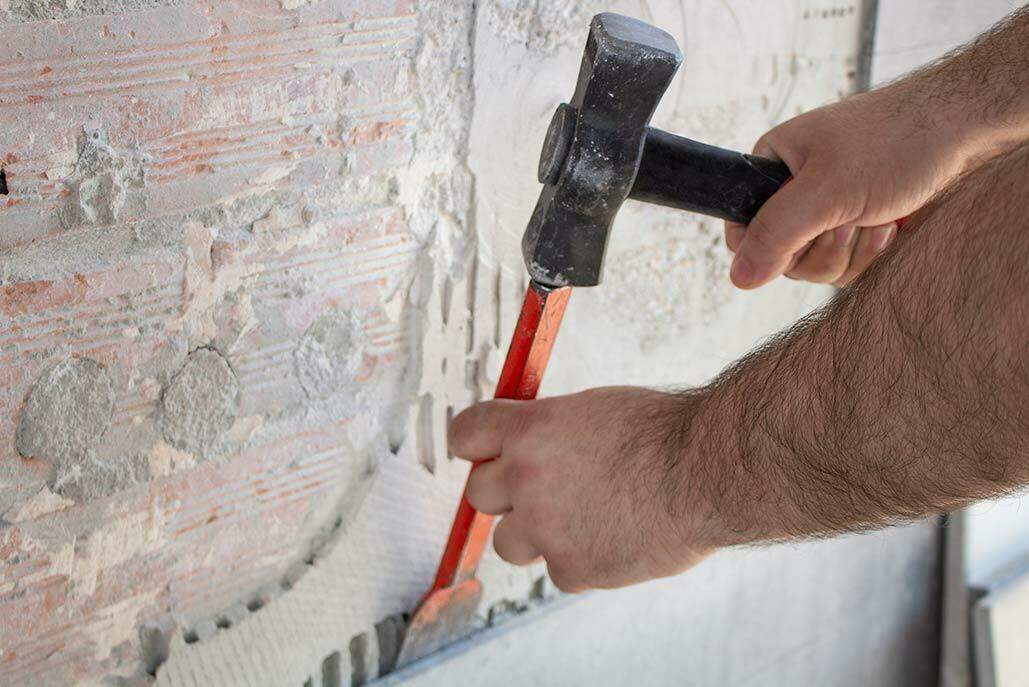

Are you sick of your dull, outdated tile finish? If so, it is time to consider a remodeling project. Demolishing your own floors or walls is a home improvement task that can save you a significant amount of money on labor.
It can be a physically demanding task, but it becomes relatively simple when you are equipped with the right tile removal tools. Whether you are tearing up a tiny bathroom backsplash or taking down a massive tile installation in a commercial kitchen, using the proper equipment is critical for efficiency and safety.
Read on to learn about the best manual and electric tools to remove tile quickly, cleanly, and safely.



Before You Start: Safety Gear and Preparation
Before we dive into the tools, you must prepare yourself. Shards of smashed ceramic and porcelain tiles are razor-sharp. When they break, they act like flying glass. Always equip yourself with:
A dust mask or respirator, as breaking thinset and grout generates a massive amount of silica dust.
Safety goggles or a full face shield.
Heavy-duty work gloves to protect your hands from sharp edges.
Knee pads, as you will spend hours on the floor.
Best Manual Tools to Remove Tile (For Small DIY Jobs)
If you are working on a budget, dealing with a small area, or trying to minimize dust, manual tools are your best bet.
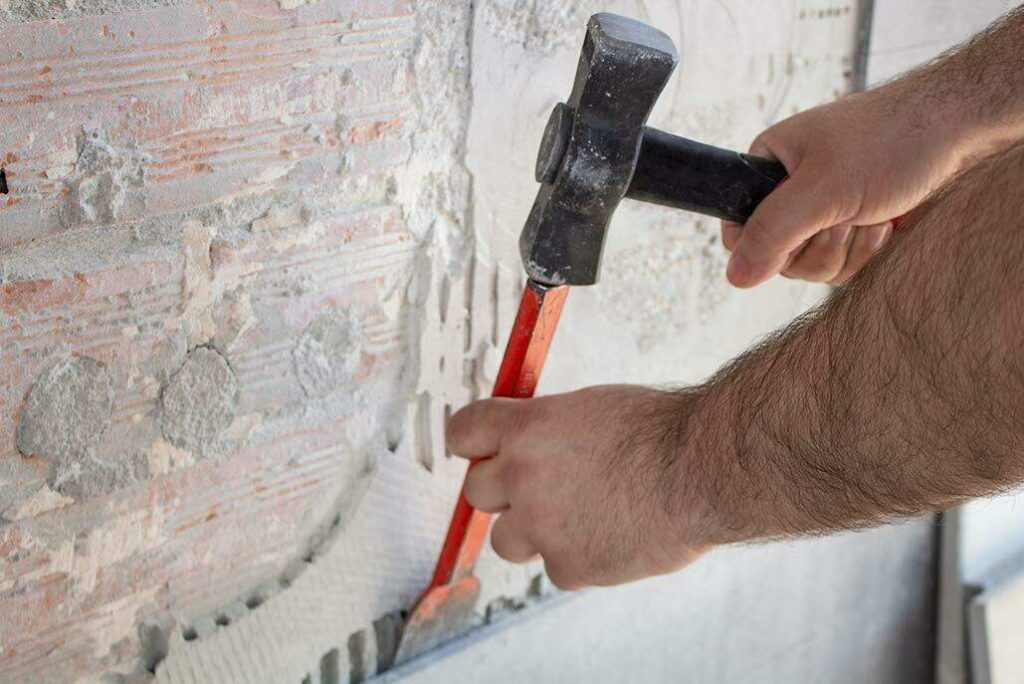
Masonry Chisel and Hammer (The Basics)
A heavy-duty masonry chisel (cold chisel) paired with a mallet or claw hammer is the most traditional floor tile removal tool. You simply place the chisel at a 45-degree angle in the grout line beneath the tile and strike the handle with your hammer to pry it up. While this method is inexpensive and excellent for tight corners, it is incredibly time-consuming for large rooms.
Pry Bar and Demolition Fork
A pry bar (or crowbar) operates similarly to a chisel but offers much more leverage due to its length. A demolition fork is a larger, heavier variation that allows you to use your body weight to lift multiple tiles at once. It is sturdy and reliable, though you will definitely feel exhausted afterward.
Long-Handled Floor Scraper
If your tiles were installed over a wood subfloor or aren’t stuck down too tightly, a manual floor scraper can be highly effective. This tool features a long handle with an angled, razor-sharp steel blade at the end. You ram the blade beneath the tile and push down on the handle to pop the tile loose.
Best Power Tools for Removing Tile (For Fast & Large Jobs)
For whole-house renovations or removing stubborn tiles set over concrete, manual tools will simply not cut it. You need the power of electricity.
SDS Rotary Hammer Drill with an Angled Chisel Bit (The Top Choice)
Ask any professional contractor what the best tool to remove tile is, and they will point to an SDS (Slotted Drive System) Rotary Hammer. Setting an SDS drill to “hammer-only” mode and attaching a 3-inch or 4-inch angled floor scraper chisel bit turns a backbreaking job into a breeze.
The drill delivers thousands of impacts per minute, effortlessly sliding under the tile and busting up both the ceramic and the mortar in seconds. If you encounter a particularly stubborn tile, you can use diamond drill bits to bore holes into the center to weaken its structure before chiseling.
Electric Grout Removal Tools (RUBI Scraper)
Removing the tile is only half the battle; you also have to deal with the grout. Doing this by hand is tedious and risks damaging adjacent tiles if you are only replacing a few broken pieces. Investing in an electric grout removal tool like the RUBI Scraper is a game-changer. Equipped with patented tungsten carbide blades, it rapidly grinds away hard grout without chipping the surrounding tiles.
Walk-Behind Floor Scrapers (Commercial Jobs)
For massive commercial spaces, contractors rent walk-behind floor scrapers. These motorized machines feature a heavy, vibrating blade that drives under tiles, stripping hundreds of square feet of flooring per hour.


How to Remove Tiles in One Piece (Without Breaking Them)
Sometimes, you may want to salvage vintage tiles or remove a few pieces without breaking them to access plumbing. To do this:
- Use an oscillating multi-tool or a RUBI Scraper to completely remove the grout surrounding the target tile.
- Heat the tile gently with a heat gun to soften the adhesive beneath.
- Gently tap a very thin putty knife or a wide masonry chisel under the tile at a low angle.
- Slowly work your way around the edges, applying light leverage until the tile pops loose in one piece.
Common Mistakes When Using Tile Remover Tools
- Swinging a Sledgehammer Wildly: While a sledgehammer is great for initial demolition, blindly smashing the floor creates millions of sharp, dangerous shards and can severely damage the wooden subfloor or plumbing pipes hidden beneath.
- Using the Wrong Angle: When using a chisel or an SDS hammer drill, keep the blade at a low, 30-to-45-degree angle. If you point it straight down, you will gouge deep holes into your concrete slab or wood subfloor, creating a nightmare for your next flooring installation.
- Not Removing the Thinset: Once the tiles are gone, the dried mortar (thinset) remains. You must scrape this down completely using a grinder with a diamond cup wheel or a floor scraper to ensure a perfectly flat surface for your new floor.
Frequently Asked Questions (FAQs)
What is the best tool to remove tile?
The undisputed best tool for removing large amounts of floor tile is an SDS Rotary Hammer Drill equipped with a wide, angled floor scraper chisel bit. It eliminates the physical strain of manual hammering and breaks through stubborn mortar effortlessly.
What is the easiest way to remove old floor tiles?
The easiest way is to first remove the grout lines surrounding the tiles using a grout scraper or oscillating tool. This breaks the tension holding the tiles together. Then, use an electric SDS hammer drill to slide under the tiles and pop them loose.
Do I need a special tool to remove thinset and mortar?
Yes. After the tiles are removed, the dried cement (thinset) left behind must be smoothed out. For small areas, a manual floor scraper works. For larger areas, you should use an angle grinder equipped with a diamond grinding cup wheel and a dust shroud connected to a shop vacuum.
Can I remove ceramic tile without damaging the drywall?
Yes, but it requires patience. First, cut through the grout and caulk lines around the perimeter of the tile. Then, use a wide, flat putty knife (instead of a thick masonry chisel) and gently tap it behind the tile, applying slow, even leverage to pop it off the drywall without tearing the paper backing.
What tools do professionals use for commercial tile removal?
Professionals use heavy-duty equipment like SDS Max Demolition Hammers (Jackhammers) for thick mortar beds, and motorized walk-behind floor scrapers to tear up thousands of square feet of tile and linoleum in commercial buildings efficiently.

Post a comment